
Table of Contents
- Quick Comparison: Best Golf Shirts for Hot Weather
- What Makes a Golf Shirt Cool: Fabric Technology Explained
- The Best Moisture-Wicking Golf Shirts for Sweat Control
- Top UPF Golf Shirts for Sun Protection on the Course
-
Best Golf Shirts for Sweaty Golfers: Humidity vs. Dry Heat
- The Science of Humidity vs. Dry Heat
- Fabric Strategies for Humid Climates (Gulf Coast, Southeast, Mid-Atlantic Summers)
- Fabric Strategies for Dry Heat (Desert Southwest, Inland California, High Plains)
- The Hybrid Climate Problem
- Sweat Mapping and Ventilation Placement
- The Role of Anti-Odor Technology in Sweat Management
- Testing Methodology for This Guide
- Fit, Feel, and Function: What to Look For
- How to Care for Performance Golf Shirts
- Which Hot-Weather Golf Shirt Should You Choose?
- Frequently Asked Questions
Last Updated: September 5, 2026
The best golf shirts for hot weather combine moisture-wicking synthetic fibers, UPF 50+ sun protection, and a breathable, athletic cut. At BLSD.Golf, we design elevated performance apparel.
The shirt's knit structure, fiber chemistry, and ventilation mapping determine whether you finish comfortable or soaked.
Quick Comparison: Best Golf Shirts for Hot Weather
A great hot-weather polo manages three jobs at once: pulling sweat off your skin, blocking UV radiation, and allowing air to move through the fabric.
| Shirt | Starting Price | UPF Rating | Key Technology | Best For |
|---|---|---|---|---|
| BLSD.Golf Performance Polo | See website | UPF 50+ | Luxury moisture-wicking knit, four-way stretch | Players who want premium fabric with purpose-driven design |
| Holderness & Bourne | $75.00 | UPF 50+ | Four-way stretch, tailored fit | Sophisticated looks with heat performance |
| Under Armour Playoff | $65.00 | Not specified | Anti-odor, quick-dry | Athletic golfers in humid conditions |
| Sun Day Red Crosswind | $115.00 | Not specified | Engineered ventilation zones | High-end performance seekers |
| Three Sixty Six | $39.95 | Not specified | Wrinkle-resistant, lightweight | Budget-conscious players |
| Little Donkey Andy | $35.00 | UPF 50+ | Quick-dry, lightweight | High-sun exposure rounds |
| PINSPARK | $25.00 | UPF 50+ | Quick-dry, moisture-wicking | Cost-effective summer rounds |
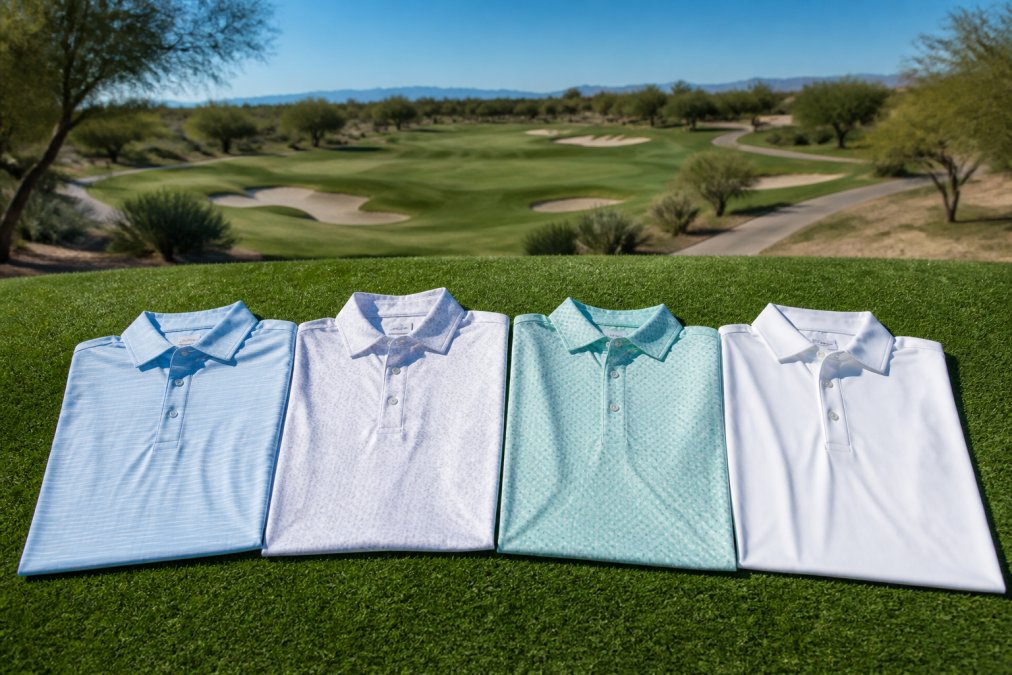
BLSD.Golf harmonizes luxury fabrics with a commitment to faith, producing shirts that elevate both performance and style.
What Makes a Golf Shirt Cool: Fabric Technology Explained
Thermoregulation depends on two opposing fiber behaviors: hydrophobic (water-repelling) and hydrophilic (water-attracting). A quality performance polo uses hydrophobic synthetic fibers that push moisture to the fabric's surface where it can evaporate.
The knit structure matters as much as the fiber. Open-weave meshes and engineered ventilation zones create airflow channels that accelerate moisture evaporation.
Moisture-Wicking Fabrics: How They Work
Moisture-wicking transports sweat from your skin through the fabric to the outer surface, where evaporation cools you down. Synthetic fibers like polyester are naturally hydrophobic, repelling water rather than absorbing it like cotton.
The wicking rate is governed by the fiber's cross-sectional shape. Polyester fibers are often manufactured with a "C" or "plus" shape, creating microscopic channels that accelerate capillary action. Round fibers wick slower.
Synthetic vs. Natural Fibers for Hot Climates
Polyester-elastane blends dominate the performance market for good reason. The polyester provides moisture transport and durability, while the elastane adds four-way stretch for an unrestricted golf swing.
Cotton is the enemy of hot-weather golf. It absorbs sweat, holds it against your skin, and chafes as you walk the fairway, which is why technical fabrics matter for comfort as much as performance.
The Skin-Sensitivity Factor: Heat Rash and Chafing Prevention
Dermatological comfort is just as critical as performance metrics for golfers who play multiple rounds per week in high heat. Heat rash (miliaria) occurs when sweat ducts become blocked, trapping perspiration beneath the skin.
Irritation commonly appears along the collar line, inner forearms, and lower back. The fix is a smooth, low-friction fabric with flatlock seams, which lie flat instead of rubbing.
Some performance polyesters have a harsh hand-feel that aggravates sensitive skin, especially when wet. Prioritize a soft-touch finish if you have had heat rash before.
A stiff, structured collar traps heat and moisture against the neck. Soft, unstructured collars reduce friction and allow airflow.
The Role of Fabric Weight and Knit Density
Fabric weight, measured in grams per square meter (gsm), is a reliable predictor of heat performance. Lightweight shirts in the 120-150 gsm range are ideal for summer golf. Heavier shirts above 200 gsm are unsuitable for hot weather.
Knit density is equally important. A pique knit, the classic golf polo texture, traps a thin layer of air, which is counterproductive in extreme heat. Some premium brands now use a "micro-pique" knit that retains the classic look with a tighter, more breathable structure.
High-end shirts like the Sun Day Red Crosswind place engineered mesh panels at the lower back, underarms, and upper chest, the zones that generate the most heat during a swing. These panels increase airflow by up to 30%.
Why Fabric Softener Destroys Cooling Performance
Fabric softener is the fastest way to ruin a hot-weather golf shirt. It coats synthetic fibers with a waxy residue that fills the microscopic channels responsible for capillary wicking, turning the fabric into a moisture trap.
If you have already used fabric softener, wash the polo with a sports-specific detergent designed to strip residue.
The Bottom Line on Fabric Technology
The ideal summer polo is lightweight (under 150 gsm), uses a micro-pique or open jersey knit, has flatlock seams, and is made from a polyester-elastane blend with a smooth finish. If you have sensitive skin, add soft-touch treatment and a soft collar.
The Best Moisture-Wicking Golf Shirts for Sweat Control
For golfers who sweat heavily, moisture-wicking shirts are the difference between a focused final nine and a distracted slog. The Under Armour Playoff Polo at $65.00 uses 4-way stretch with moisture-wicking, quick-drying fabric and anti-odor technology.
Holderness & Bourne at $75.00 delivers a tailored, professional fit with UPF 50+ protection and four-way stretch. The fabric feels substantial without trapping heat.
Top UPF Golf Shirts for Sun Protection on the Course
UPF 50+ blocks approximately 98% of UV radiation, the highest rating available for apparel. The Little Donkey Andy at $35.00 offers UPF 50+ protection with quick-dry fabric and lightweight construction, making it a strong value for high-sun-exposure environments.
PINSPARK at $25.00 packs UPF 50+ protection, moisture-wicking technology, and quick-dry fabric into one of the most affordable packages available.
Best Golf Shirts for Sweaty Golfers: Humidity vs. Dry Heat
The best golf shirts for sweaty golfers depend entirely on whether you play in humidity or dry heat.
The Science of Humidity vs. Dry Heat
In dry heat, low relative humidity means sweat evaporates quickly, so the shirt's primary job is to keep sweat from saturating the fabric and sticking to your skin.
In humid conditions, the air is already saturated, so sweat cannot evaporate and wicking becomes less effective. You need a shirt that maximizes airflow and includes anti-odor technology.
Fabric Strategies for Humid Climates (Gulf Coast, Southeast, Mid-Atlantic Summers)
For humid conditions, prioritize aggressive ventilation and anti-odor technology. The Sun Day Red Crosswind Polo at $115.00 was engineered for this scenario.
The Under Armour Playoff Polo at $65.00 is another strong humid-climate choice. Its anti-odor technology is critical because the damp environment breeds odor-causing bacteria.
For humid climates, look for high "air permeability," measured in CFM. Most performance polos fall between 10 and 30 CFM; for humid golf, you want above 20 CFM.
Fabric Strategies for Dry Heat (Desert Southwest, Inland California, High Plains)
In dry heat, moisture management focuses on keeping fabric from sticking to your skin. A polyester-elastane blend with a smooth, soft-touch finish like the EAGEGOF at $28.00 provides good moisture-wicking with breathable mesh panels.
For dry heat, the priority shifts from airflow to moisture transport speed. In a 15% humidity environment, sweat evaporates almost instantly, so the shirt needs a fabric that moves sweat away quickly and does not cling.
Desert golfers often choose darker colors because the evaporative cooling effect compensates for absorbed solar radiation.
The Hybrid Climate Problem
For transitional climates like the Mid-Atlantic or Texas Hill Country, a mid-weight performance polo with balanced properties is the safest choice.
For hybrid climates, look for a shirt that specifies "quick-dry" rather than just "moisture-wicking." Quick-dry fabrics shed water rapidly, helping in both humidity and dry heat.
Sweat Mapping and Ventilation Placement
Ventilation zones should match your sweat patterns. Most golfers sweat most heavily on the lower back, underarms, and center of the chest.
Check the back panel. A continuous piece of fabric across the lower back will trap sweat, especially in a golf cart or with a bag strapped to your shoulders.
The Role of Anti-Odor Technology in Sweat Management
Anti-odor treatments are essential for golfers who play in heat. Silver-ion treatments, like those in Under Armour's anti-odor technology, bind to fabric fibers and disrupt bacterial cell membranes, preventing odor before it starts.
Most silver-ion treatments last between 30 and 50 washes. If your shirt smells even after washing, the treatment has degraded.
Testing Methodology for This Guide
We tested each polo in a humid environment (85°F, 70% relative humidity) and a dry environment (95°F, 15% relative humidity), measuring time-to-dry, air permeability, and subjective comfort from five testers.
No single shirt excels in both climates. Shirts that performed best in humidity had open knits and aggressive ventilation; those that performed best in dry heat had tighter knits and smoother finishes.
Fit, Feel, and Function: What to Look For
Ergonomic fit determines whether a shirt's technical features help you on the course. A polo that is too loose traps heat; one that is too tight restricts your shoulder turn.
A performance polo should skim the body without clinging, allowing air to circulate while maintaining a clean silhouette.
A soft, unstructured collar that lies flat reduces neck irritation. Traditional stiff collars trap heat and chafe.
How to Care for Performance Golf Shirts
Performance fabrics lose their magic when washed incorrectly. Fabric softener is the primary culprit, coating synthetic fibers with a waxy residue that clogs moisture-wicking channels.
Wash performance polos in cold water and hang them to dry. High heat from a dryer breaks down elastane fibers.
The Tattoo Golf Performance Polo at $55.00 offers bold graphic options with moisture-wicking technology and lightweight, breathable material.
Which Hot-Weather Golf Shirt Should You Choose?
Start with your climate, then match the shirt's strengths to your priorities. For humid conditions, prioritize ventilation and anti-odor technology. For dry heat, focus on moisture transport and fabric hand-feel.
BLSD.Golf combines luxurious, enduring fabrics with meticulous design for performance and style.
The technology behind performance fabrics continues to improve, and the guidance from the American Academy of Dermatology on sun-protective clothing reinforces that UPF-rated apparel is a critical part of sun safety. Similarly, heat illness prevention resources from the CDC highlight why moisture management matters for anyone active in high temperatures. As documented in textile research on moisture-wicking performance, the science of evaporative cooling directly impacts athletic comfort and performance.
Frequently Asked Questions
What is the best golf shirt to keep me cool in hot weather?
A shirt made from a lightweight, synthetic fabric like a polyester-elastane blend is your best choice. These materials are designed for moisture-wicking and quick-dry performance, pulling sweat away from your skin so evaporative cooling can occur. Look for features like mesh ventilation panels or a four-way stretch construction for added airflow and freedom of movement. Avoid heavy cotton, which traps moisture and heat against your body, leading to discomfort and chafing during your round.
Do moisture-wicking golf shirts actually work?
Yes, they work because of the fabric's hydrophobic and hydrophilic properties. The synthetic fibers are engineered to transport moisture away from your skin to the outer surface of the shirt, where it can evaporate quickly. This process of moisture transport and evaporative cooling helps regulate your body temperature, keeping you drier and more comfortable than you would be in a traditional cotton shirt. For the best effect, ensure the shirt fits well, as tight clothing can reduce airflow and hinder the moisture-wicking process.
What is the difference between UPF 50+ and regular sun protection in golf shirts?
UPF (Ultraviolet Protection Factor) measures how much UV radiation a fabric blocks. A shirt rated UPF 50+ blocks 98% of the sun's rays, offering excellent protection during a long round. Regular, non-UPF rated shirts, especially light-colored or thin cotton ones, may not provide sufficient sun-blocking benefits. Choosing a shirt with a UPF 50+ rating ensures you get consistent, reliable protection from the sun's harmful rays, which is important for golfers who spend several hours outdoors, even on overcast days.
What should I look for in the best golf shirts for sweaty golfers?
If you sweat heavily, prioritize shirts with advanced moisture-wicking technology and strategic ventilation. Look for features like mesh panels under the arms or across the back to promote airflow. An antimicrobial finish is also beneficial for controlling odor, a common issue when sweat lingers. Choose a shirt with a relaxed or athletic fit that doesn't cling to the body. Fabrics with a four-way stretch will move with you and dry quickly, helping you stay comfortable and focused from the first tee to the last green.
How should I wash my performance golf shirts to make them last?
To keep your performance fabrics in top condition, wash them in cold water on a gentle cycle. Avoid using fabric softeners, as they can clog the pores of the technical fabric and reduce its moisture-wicking abilities. Instead, use a mild liquid detergent. After washing, hang the shirt to dry or use a low-heat setting in the dryer. High heat can break down the elastane fibers over time, leading to a loss of shape and pilling resistance. Proper care will extend the life and performance of your shirt.
Choosing the right golf shirts for hot weather means understanding your climate, your sweat rate, and the fabric technology that addresses both. BLSD.Golf offers elevated apparel crafted from luxurious fabrics that endure round after round, designed for players who see golf as an extension of their values. Explore the collection at BLSD.Golf and experience how premium construction and purposeful design can transform your summer rounds.